
Email [email protected] to get started with your ad campaign.
Copyright © 2026 Mazer Media. All rights are reserved.
EXPERT INSIGHTS
What Pixar Can Teach Us About Creating Better Video Ads and Brand Stories
July 10, 2026
Written by Matt Schramer / Mazer Media
Storytelling principles behind some of Pixar's movies also apply to commercials, marketing videos, and branded content.
I'll admit I haven't loved all of Pixar's recent movies. For many years, Pixar had an incredible track record of making movies that were entertaining, emotional, funny, and meaningful. And somehow, they managed to make stories that kids and adults could enjoy equally.
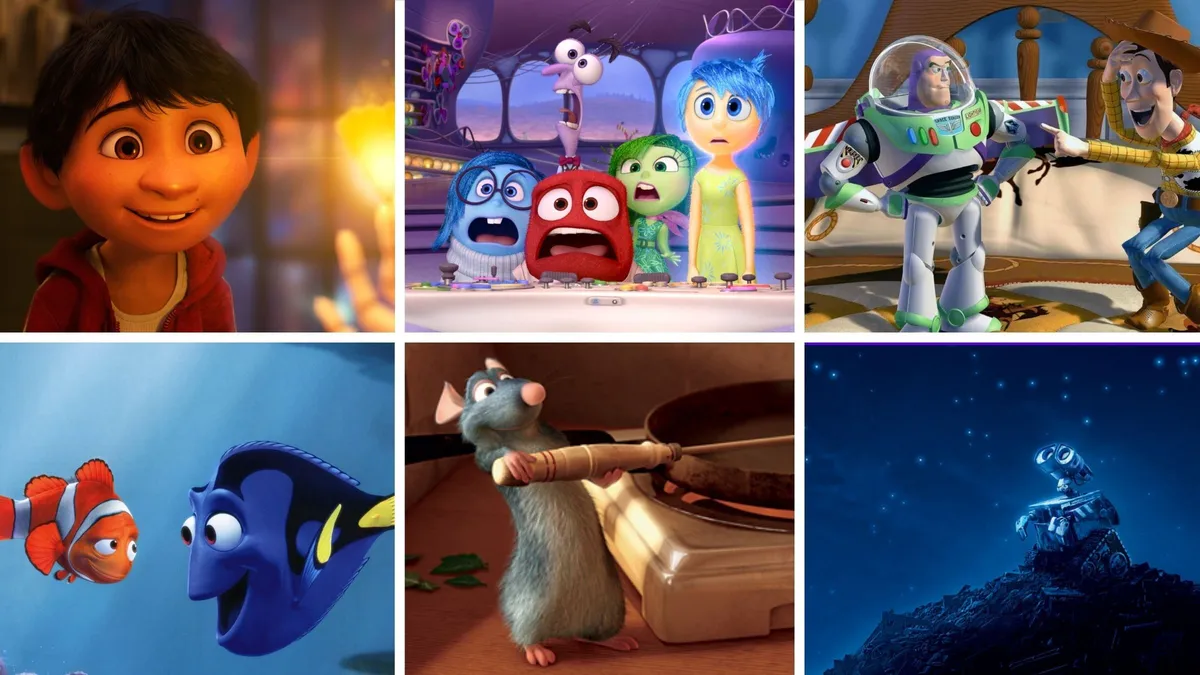
Think about Toy Story, Up, Finding Nemo, WALL-E, or The Incredibles.
These movies are completely different from one another, but they have something important in common. They make us care about the characters and what happens to them. We laugh. We worry. We get emotional. And years later, we still remember those stories.
That's the power of great storytelling.
And here's what I find interesting as a commercial director and video producer: The same storytelling principles that make a great Pixar movie can also make a great commercial and video ad.
Obviously, we don't have 90 minutes to tell a story in a 30-second commercial or a 60-second brand video. But the fundamentals are surprisingly similar. In fact, I'd argue that good storytelling is even more important in advertising because we have so little time to earn someone's attention.
Pixar's 22 Rules of Storytelling
Several years ago, former Pixar storyboard artist Emma Coats shared 22 storytelling principles she had learned during her time at Pixar. They weren't an official Pixar rulebook, but rather a collection of lessons and insights from the studio's creative process.
Some deal with developing characters. Others focus on structure, emotion, conflict, simplicity, and finding the heart of a story. And while they were originally intended for filmmakers and writers, I think many of these principles are just as relevant to businesses trying to connect with their customers.
You can read all 22 storytelling rules here.
I want to focus on several that I believe are especially important for video advertising and brand storytelling, along with some practical ways to apply them to your next commercial or marketing campaign.
1. Make Your Customer the Hero, Not Your Brand
One of Pixar's most important storytelling principles is that we admire characters because of their effort, not simply because they succeed. Think about Finding Nemo.
Marlin isn't particularly brave or adventurous. He's actually terrified of almost everything. But when his son disappears, he leaves the safety of his home and faces his greatest fears to find him. We care about Marlin because we understand what he's fighting for. Now think about how most companies approach advertising.
They talk about themselves. How long they've been in business. How innovative their products are. How many awards they've won. How they're the best at what they do.
There's nothing inherently wrong with communicating those things. But that's not necessarily what makes someone care.
Your customer should be the hero of your story. Your brand should help them succeed.
For example, imagine a commercial for a home security company. The obvious approach would be to show the cameras, explain the technology, list the features, and talk about how reliable the system is, but what if the commercial focused on a father who's worried about his family while he's away on a business trip?
Suddenly, we're not selling security cameras. We're telling a story about peace of mind. The product still matters. But it matters because of what it does for the person using it.
That's an important distinction. When developing a brand video, I like to think about three questions:
Who is the person we're trying to reach?
What are they struggling with, worried about, or hoping to accomplish?
How does this product or service help them overcome that challenge?
If we can answer those questions, we're already much closer to finding a compelling story.
2. Remember That Your Audience Doesn't Care About Your Ad as Much as You Do
This might be my favorite principle from Pixar.
Coats makes the distinction between what interests the storyteller and what interests the audience. That's a lesson every marketer, creative director, and business owner should remember.
We spend weeks or months developing a product, planning a campaign, writing a script, and producing a commercial. Naturally, we're excited about it. But our audience hasn't been part of that process. They don't know how much work went into the video. They don't care that we used an expensive camera or spent three days getting the lighting just right. And they certainly didn't open Instagram or YouTube hoping to watch our commercial.
They're there for something else.
Our job is to make something interesting enough that they choose to watch it anyway.
That means we need to stop thinking only about what the brand wants to communicate and start thinking about what the audience actually wants to experience.
Maybe they want to laugh.
Maybe they want to learn something useful.
Maybe they want to feel understood.
Maybe they are searching for answers to a problem.
Or maybe they just want to watch something surprising, entertaining, or visually interesting.
A commercial doesn't have to be emotional or cinematic to be effective. Sometimes humor is the best approach. Sometimes it's a clever demonstration or an unexpected visual. But it does need to give the viewer a reason to care.
Before producing any marketing video, ask yourself:
If this weren't my company, would I actually want to watch this?
It's a simple question, but it can completely change the creative direction of a campaign.
3. Give Your Story a Problem Worth Solving
Every great story needs some kind of conflict. That doesn't mean your commercial needs a villain, a dramatic confrontation, or someone running for their life. Conflict can be something as simple as an everyday frustration.
A busy mother trying to get her kids ready for school.
A business owner overwhelmed by administrative work.
An athlete struggling to recover after a difficult workout.
A family worried about being prepared for an emergency.
These are situations people recognize because they've experienced them.
Pixar often takes a familiar emotional problem and places it inside an imaginative world. In The Incredibles, for example, we have superheroes with extraordinary abilities. But underneath the action and humor is a story about a family struggling with identity, expectations, and relationships.
That's what makes the movie relatable. The superhero action makes it entertaining. The family struggles make it meaningful.
The same principle applies to advertising.
If you're creating a commercial for a health and wellness product, don't just show someone smiling while holding the product.
Show us the challenge that makes the product relevant. What was difficult before? What changed? Why does that change matter? And remember, the problem doesn't always have to be serious.
A funny, exaggerated version of an everyday frustration can be just as effective as an emotional story. The important thing is that the audience recognizes something familiar.
When viewers see their own experiences reflected in your story, they're more likely to connect with the message.
4. Use Pixar's Simple Story Structure for Your Next Commercial
One of Pixar's most useful storytelling principles is a basic narrative structure. It follows this progression:
Once upon a time...
Every day...
One day...
Because of that...
Because of that...
Until finally...
It's remarkably simple. But it forces you to establish a character, their normal life, something that changes, and the consequences that follow.
Let's apply that structure to a hypothetical commercial for an emergency preparedness brand.
Once upon a time: There was a family living in a quiet neighborhood.
Every day: They went about their normal routines, assuming everything would continue as usual.
One day: A severe storm knocked out the power.
Because of that: The family suddenly had to figure out how to manage without electricity.
Because of that: They relied on the emergency supplies they had prepared in advance.
Until finally: Instead of feeling helpless, they were able to focus on keeping their family comfortable and safe.
Now we have the beginning of a story.
Of course, we'd need to develop the concept further and find an interesting visual approach. But we've moved beyond simply listing product features. We've created a situation where the product has a meaningful purpose.
This framework works for almost any industry, whether you're selling outdoor equipment, financial services, healthcare products, or software.
And you don't necessarily need dialogue or a narrator to tell it. Sometimes a sequence of carefully planned images can communicate the entire story. That's one of the things I love about filmmaking. A look between two people, a small action, or a well-timed visual reveal can communicate something that would otherwise take several sentences to explain.
5. Simplify Your Message. Then Simplify It Again.
Another Pixar principle encourages storytellers to eliminate unnecessary characters, combine ideas, and remove detours. This is especially important in commercials.
One of the biggest challenges I see in video advertising is trying to communicate too much information in too little time.
A company wants to talk about its history, explain five product features, introduce a new service, highlight customer testimonials, and end with three different calls to action. All in 30 seconds.
The result is usually a commercial that feels rushed, cluttered, and difficult to remember.
Here's something I've learned from producing commercials and branded videos:
Just because you can fit more information into a video doesn't mean you should.
A good commercial usually needs one central idea. Not five. One.
That doesn't mean you can't communicate multiple benefits. But those benefits should support the same overall message.
For example, instead of creating a commercial that explains every feature of a fitness product, you might focus on one powerful benefit: helping someone regain the confidence to do something they love.
The features can still appear visually or through supporting messaging, but they aren't competing for attention.
When we're developing a commercial, I think it's useful to ask:
If someone remembers only one thing from this video, what should it be?
If we can't answer that question clearly, the concept probably needs more work. And sometimes the most difficult part of writing a great commercial isn't deciding what to include. It's deciding what to leave out.
6. Surprise Your Audience
Pixar encourages writers to move beyond their first few ideas because the most obvious solution isn't always the most interesting. I think this is one of the most overlooked principles in advertising.
A lot of commercials look and sound alike. We've all seen the same predictable imagery.
A smiling family gathered around a kitchen island.
A business team collaborating in a conference room.
An athlete running at sunrise.
A customer looking thoughtfully out a window.
There's nothing necessarily wrong with any of those images. Sometimes they're exactly what a story needs. But when we rely on familiar advertising clichés without giving them a new perspective, the audience can often predict the entire commercial within the first few seconds. And when something becomes predictable, it's easier to ignore.
One of the things I enjoy most about developing commercial concepts is finding an unexpected way to communicate a familiar message.
Maybe it's a surprising opening image.
Maybe it's a visual metaphor.
Or maybe we lead the audience to believe one thing is happening, only to reveal something different at the end.
Think about the commercials you remember years after seeing them. Chances are, many of them did something you weren't expecting.
They made you laugh, surprised you, or presented an ordinary situation in an unusual way.
Surprise creates curiosity. Curiosity gives people a reason to keep watching.
But there's an important distinction here. A surprising moment should still serve the story and the brand. Being weird simply for the sake of being weird might get someone's attention, but it doesn't necessarily help them remember what you're selling.
The best creative ideas connect the surprise directly to the message.
7. Make People Feel Something
I think this is where Pixar has historically been especially successful. Remember the opening montage in Up?
In just a few minutes, we experience an entire relationship, from childhood dreams to marriage, disappointment, growing older, and loss.
Very little dialogue is needed. The images, music, performances, and editing do most of the storytelling. It's a great reminder that visual storytelling can communicate emotion incredibly efficiently. Now, I'm not suggesting every commercial needs to make people cry. Far from it.
Emotion can mean happiness, excitement, nostalgia, anticipation, relief, pride, laughter and so many other things.
The question is whether the audience feels anything at all. Too many marketing videos focus entirely on communicating information. But information alone isn't always memorable.
Imagine two commercials for the same outdoor apparel brand.
The first shows beautiful mountain footage while a narrator explains the jacket's technical specifications.
The second follows a father and daughter struggling through a cold, early-morning hike before reaching a spectacular overlook together.
Both commercials might demonstrate the product's durability and weather protection. But the second gives those features a reason to matter. It's no longer just about a jacket. It's about the experience the jacket helps make possible. And that's often where a stronger brand connection begins.
8. Start With the Ending in Mind
One Pixar principle recommends figuring out your ending before working through the middle of the story. That's excellent advice for commercial filmmaking. A strong ending can give an entire commercial its purpose.
Maybe the ending is a surprising reveal.
Maybe it's a funny payoff.
Maybe it's an emotional moment that changes how we understand everything we've just watched.
Or maybe it's a simple product demonstration that answers the question established at the beginning.
Whatever it is, the ending should feel earned. I especially like commercials where the final moment makes you want to watch the video again. You notice something you missed the first time. Or the ending gives an earlier scene a completely different meaning. Those are the kinds of creative choices that can make a short video memorable.
But we also need to remember that many viewers won't watch all the way to the end. That's why a strong opening is just as important. For digital advertising, I like to think of the beginning and ending as working together.
The opening creates curiosity.
The middle develops the situation.
The ending delivers the payoff.
And the brand should be integrated naturally enough that viewers understand the connection, even if they don't watch every second.
9. Don't Confuse Great Cinematography With Great Storytelling
This is something I feel strongly about as a filmmaker. I love beautiful cinematography. Interesting lighting, creative camera movement, strong compositions, production design, and cinematic visuals are all things I enjoy bringing to commercial projects.
But none of those things can rescue a story that isn't working.
You can shoot a commercial on an expensive cinema camera, hire a talented crew, film in an incredible location, and create gorgeous images. But if the audience doesn't understand the message or care about what's happening, all you've created is an expensive collection of pretty shots.
Pixar's storytelling principles remind us to find the heart of the story first. Then use the filmmaking tools to bring that story to life.
Camera movement should have a purpose. Lighting should support the mood. Editing should guide the audience's attention.
Music should reinforce the emotion. And every shot should contribute something meaningful.
Sometimes the most effective moment in a commercial is a beautifully composed cinematic shot.
Other times it's a simple close-up of someone's reaction.
The goal isn't to make every shot impressive.
The goal is to make every shot matter.
That's a distinction I think more brands should consider when investing in video production.
10. Respect Your Audience's Time
This brings me to what I believe is one of the most important lessons for modern advertising. People have more content competing for their attention than ever before.
Commercials, social media videos, podcasts, streaming services, emails, text messages, and countless other distractions are constantly fighting for a few seconds of their day. And advertising is often the thing interrupting what they actually wanted to watch.
We need to respect that. If someone gives us 15, 30, or 60 seconds of their attention, we should give them something worthwhile in return. That might be entertainment. It might be helpful information. It might be a new perspective. Or it might simply be a moment that makes them smile.
But there should be value in the experience itself, not just in the product we're trying to sell.
This is especially relevant for social media advertising. I think one of the biggest mistakes brands make is treating every video like a traditional sales pitch. They immediately introduce the company, explain the product, and tell the viewer to buy something.
There's a place for direct-response advertising, and sometimes that approach is exactly what a campaign needs. But if we're trying to build long-term brand recognition and trust, we also need to create content people enjoy engaging with.
Something they might share with a friend. Something they might watch again. Something that makes them remember the brand for the right reasons.
We should be asking ourselves not just whether the commercial communicates our message, but whether it earns the time we're asking people to give us.
How to Apply These Principles to Your Next Marketing Video
So how do we take these ideas and actually use them?
Before writing a script, creating a storyboard, or planning a shoot, I recommend working through a few basic questions.
First, understand your audience.
Who are you trying to reach? What matters to them? What problems do they encounter in their everyday lives?
Don't just think about demographics. Think about their actual experiences.
Second, find the human connection.
What makes your product or service meaningful?
Maybe it saves someone time, reduces stress, makes their life easier, helps them accomplish something, or creates an experience they couldn't have otherwise.
That's often where the story begins.
Third, choose one central message.
What do you want viewers to remember?
If your commercial tries to communicate everything, there's a good chance people won't remember anything.
Fourth, develop a story rather than a list of features.
Introduce a situation, establish a challenge, and show how something changes.
Even a short commercial can have a beginning, middle, and end.
Fifth, find an unexpected creative approach.
Challenge the obvious ideas.
Could the story be funnier? More surprising? More emotional? Could it be told visually instead of through narration?
Finally, make sure the brand belongs in the story.
This is important.
You can create a fantastic short film that people love, but if nobody remembers the brand or understands the connection to the product, the advertising may not accomplish its purpose. The story and the marketing objective need to work together. That's what separates a good film from a good commercial.
Great Storytelling Is Also Good Marketing
I think sometimes we create an unnecessary division between creativity and marketing effectiveness. As if we have to choose between making something entertaining and making something that sells. But I don't believe those things are mutually exclusive.
In fact, the most effective advertising often finds a way to do both.
A compelling story can help people understand a product's value without feeling like they're being lectured.
A funny commercial can make a brand more memorable.
An emotional story can help customers recognize how a product fits into their own lives.
And a surprising creative concept can make someone stop scrolling long enough to hear what you have to say.
Of course, a great story doesn't automatically guarantee a successful campaign. We still need the right audience, the right distribution, a clear marketing objective, and a way to evaluate results. A beautiful commercial that reaches the wrong people won't accomplish much. And an entertaining video that doesn't connect back to the brand can miss the mark too.
But when strong storytelling and smart marketing strategy work together, we have a much better opportunity to create advertising that connects with people.
The Biggest Lesson Pixar Can Teach Brands
If I had to summarize all of this into three principles, they'd be these:
1. Always bring value to your customers.
Whether you're entertaining, educating, inspiring, or helping someone solve a problem, give your audience something worthwhile.
2. Respect their time.
Attention is valuable. Don't waste it with unnecessary information, predictable messaging, or content that exists only to promote your company.
3. Make content that's captivating and relevant.
Understand what your customers are experiencing, what they're struggling with, and what matters to them. Then find a creative way to connect your message to those experiences. That's what I love about Pixar's approach to storytelling.
At its best, Pixar doesn't begin by asking what information it wants to communicate. It gives us a character, a situation, a problem, and a reason to care. And then it takes us on a journey.
We might only have 30 seconds to do that in a commercial, but the principle is exactly the same.
At Mazer Media, that's the kind of approach I believe in: developing creative concepts and producing cinematic video advertising that does more than simply look good.
I want to make commercials that tell a story, connect with people, and give them a reason to keep watching. Because at the end of the day, the best advertising doesn't just tell people what a brand does. It gives them a reason to care.
And if we can do that while making something people actually want to watch, even better.